


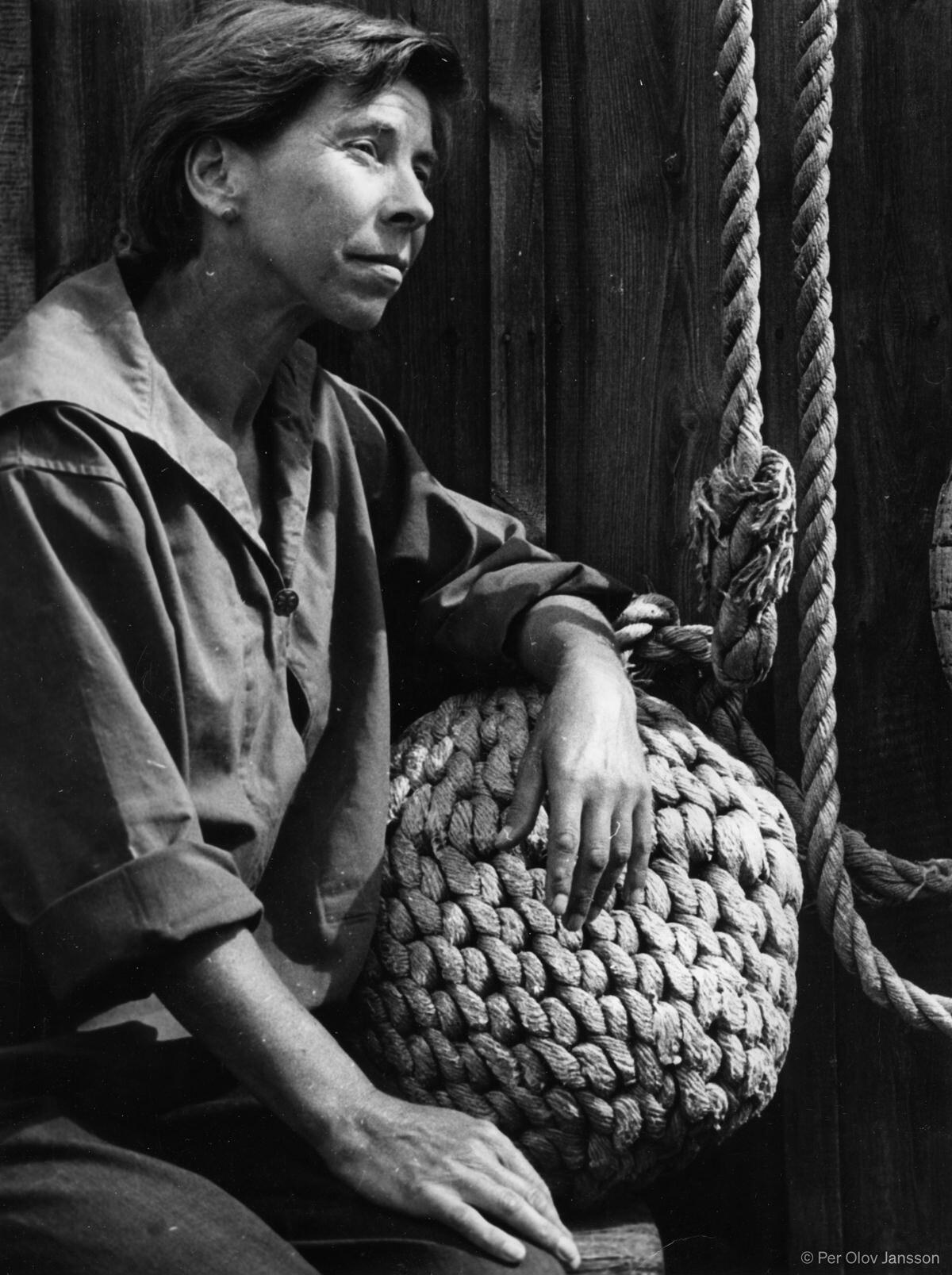
Courtesy of tovejansson.com
About Moomin and Tove Jansson
Welcome to a fan-made historical website for Moomin, a whimsical fantasy Finnish series first written in Swedish by multidisciplinary artist and author Tove Jansson in 1945. Set in the peaceful Moominvalley, a family of friendly bohemian trolls live in harmony with nature and embark on idyllic adventures with their friends. The Moomin family consists of Moominmama, Moominpapa, Moomin, his girlfriend Snorkmaiden and her brother Snork. Snufkin, Little My, and Sniff are welcomed into their humble abode, the Moominhouse, where they often become part of the Moomins. Snufkin leaves during the winter and returns in the spring, and Moomin misses his company each year. The folks in the valley journey through the seasons among rivers, the sea, and the Lonely Mountains, at times enjoying the beach. Despite the tranquility of the valley, the Moomins and others persevere through any hardship that comes their way and overcome fear, a frequent theme in the writing.Tove Marika Jansson was born in Helsinki, Finland, on August 9th, 1914, and died June 27th, 2001, in her hometown. Her father, Viktor Jansson, a sculptor, and her mother, Signe Hammarsten-Jansson, a Swedish-born graphic designer were her parents, both tremendous influences in her life. Her siblings had their own hobbies: Lars Jansson, a cartoonist and writer, much like his older sister, and Per Olov Jansson, a photographer. She was raised in a family of artists, an intriguing, witty woman, which is reflected in her work and how she represents her life. Jansson attended Läroverket för gossar och flickor in Helsinki, then studied at Konstfack (University College of Arts, Crafts and Design), in Stockholm in 1930 – 1933. Continuing her art education, in 1933 – 1937 she attended the Graphic School of the Finnish Academy of Fine Arts, and in 1938 she completed her studies at L'École d'Adrien Holy and L'École des Beaux-Arts in Paris. Held her first solo exhibition by 1943. Tove Jansson: Life, Art, Words, The Authorised Biography by Boel Westin extensively provides insight into her.Her relatives had a vital impact on Moomin's very existence. One summer day, Moomin was born from a crude drawing entitled Snork, the ugliest creature she could imagine. He was scribbled on the outhouse wall adjacent to their summer cottage in the archipelago while discussing literary philosophy with her brother Per Olov where she quoted Immanuel Kant and he outright disagreed. Snork later became Moomintroll during development, a name her uncle Einar had come up with during her childhood when he cautioned her against night eating, convincing her moo-oo-oomintrolls lived in the cupboard, and would press their cold noses against your leg and blew cold air down your neck. (Moomin) During the Winter War in Finland, which began in 1939, despite struggling in her creative career, Jansson created The Moomins and the Great Flood to help herself, while her brother Lars was also fighting in World War II. She published the book in 1945. (Moomin & Matador Network) Although it was a rough start with some critical reception, she persevered and kept making Moomin, refining the series into what it is now. In fact, she worked so hard that in 1946 and 1948, Comet in Moominland and Finn Family Moomintroll were published and received immense critical acclaim. Tove took advantage of more than one medium, despite having her ups and downs with her enormous focus on Moomin. Work and love was her main focus in life and she herself has expressed this sentiment. (Tove Jansson)One of her earliest employers was the progressive anti-fascist satirical magazine Garm, during World War II was the foremost cartoonist for the company. About a hundred covers, including over five hundred images and caricatures depicting all of an artist's life to the events of the war were illustrated. Jansson satirized Hitler and Stalin critically under her own name, expressing her outspoken opinions on dictatorship. (Tove Jansson) Further, she created illustrations for The Hobbit by J.R.R. Tolkien in 1960, as requested by Swedish children’s book author Astrid Lindgren. Editor Åke Runnquist also asked her to illustrate Alice in Wonderland by Lewis Carroll in 1965 – Jansson was a workaholic. (Tove Jansson) Regardless, she lived on her own private island named Klovharu, where she found much comfort. During her childhood summers, Jansson was a swimmer and loved the islands, which connections can be made to Moomintroll and her love for the sea. By 1964, she spent almost 30 summers with her life partner, Tuulikki Pietilä, on the Pellinge archipelago, returning to Klovharu from long journeys around the world, seeking solace. (thisisFINLAND)With her active imagination and deep desire to learn, she has left a uniquely positive influence on writing and cartooning, shaped by her life experiences. Tove used her skills and work to make sense of her life, fostering a sense of wholesomeness while representing herself with integrity. Parts of the cast are modeled on her; for example, the charm and kindness of Moomintroll and the mischievousness of Little My are meant to be small reflections of her, even if they contrast. (Moomin) Her storytelling heavily draws on themes of adventure, philosophy, family, friendship, and love, further bringing humanity closer together.By sharing a daily Moomin comic strip, Tove Jansson should inspire, as she sets an excellent example of an artist who survived challenging times. Additionally, the Moomin fanbase should aim to document more of her media, and even then, this little website is only the start of this ongoing project. Jansson has had an incredible impact on many of the cartoonists and animators we know and love today internationally and remains quite relevant. For instance, if you take a closer look at Craig McCracken's deviantArt page, in his bio under favorite visual artists you will find he includes Tove Jansson. Additionally, Rebecca Sugar is directing the upcoming American Moomin movie.The goal of this fan-made website is to teach more people firsthand about this cute cartoon and enlighten. Also, for the passionate Moomin fans, too. Whether you enjoy this type of content or not, or know someone who would, you cannot be mad at Moomintroll when you see him. As a franchise, an extensive library of media exists and continues to be discovered by many around the globe. Mainly, newcomers are familiar with the 1990 anime adaptation of Moomin; there are many different interpretations across Europe and parts of Japan. In fact, during the mid-century, a variety of interesting, obscure media emerged.Anyone who would like to join me in collecting information is more than welcome to leave suggestions on Twitter or Bluesky. I highlight several resources for those curious to learn about the marvelous Moomins by Tove Jansson and the artist herself here, a list of links, including shops to buy from and locations to visit.
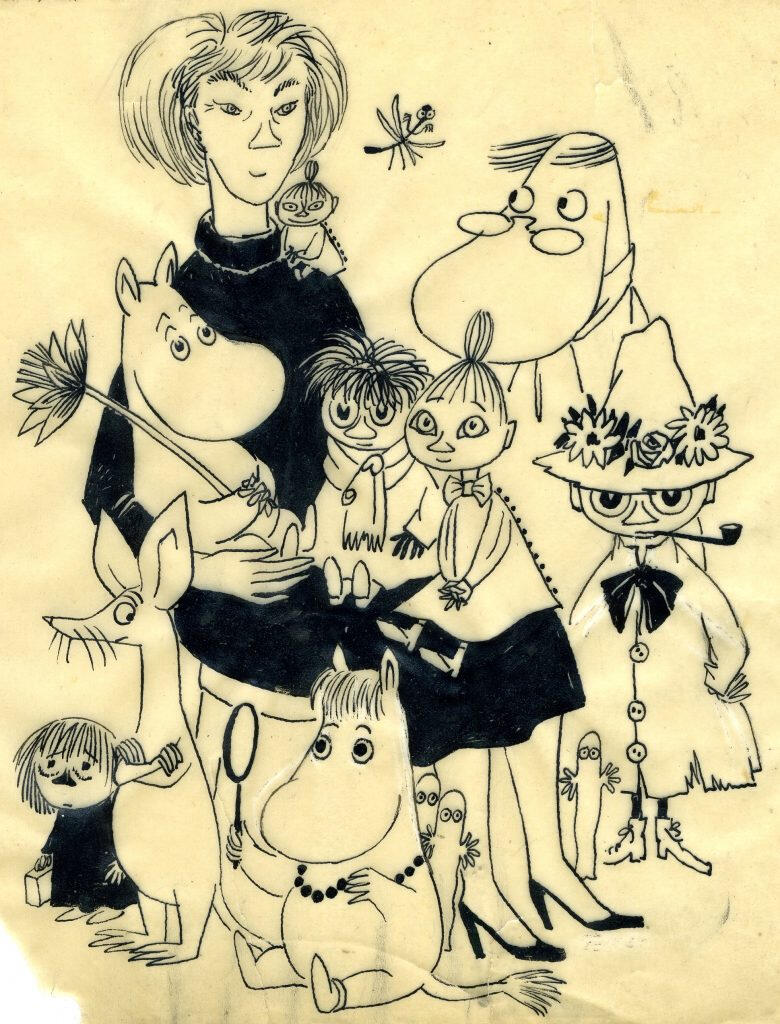
Tove Jansson cartoon portrait
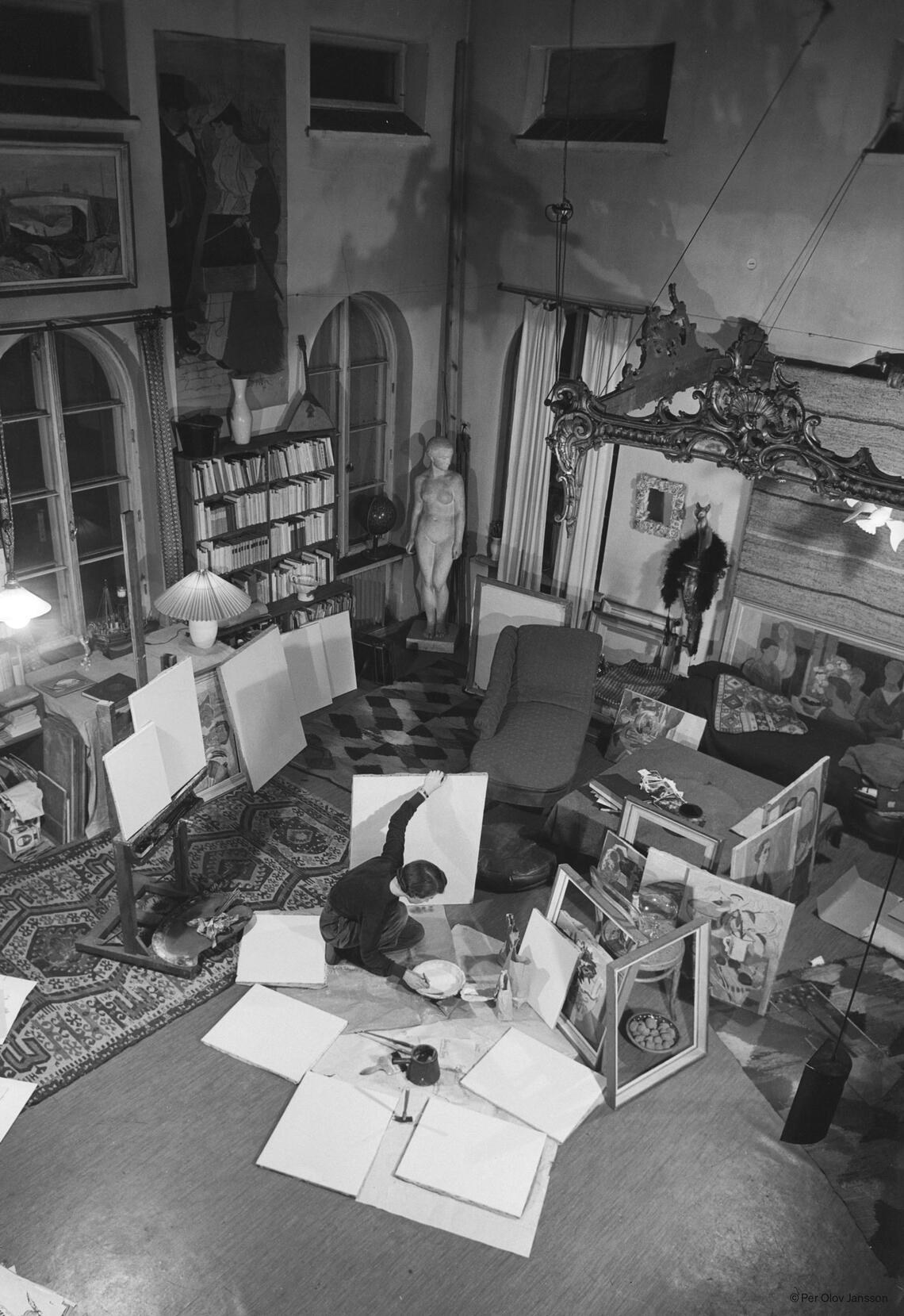
Tove Jansson in her studio
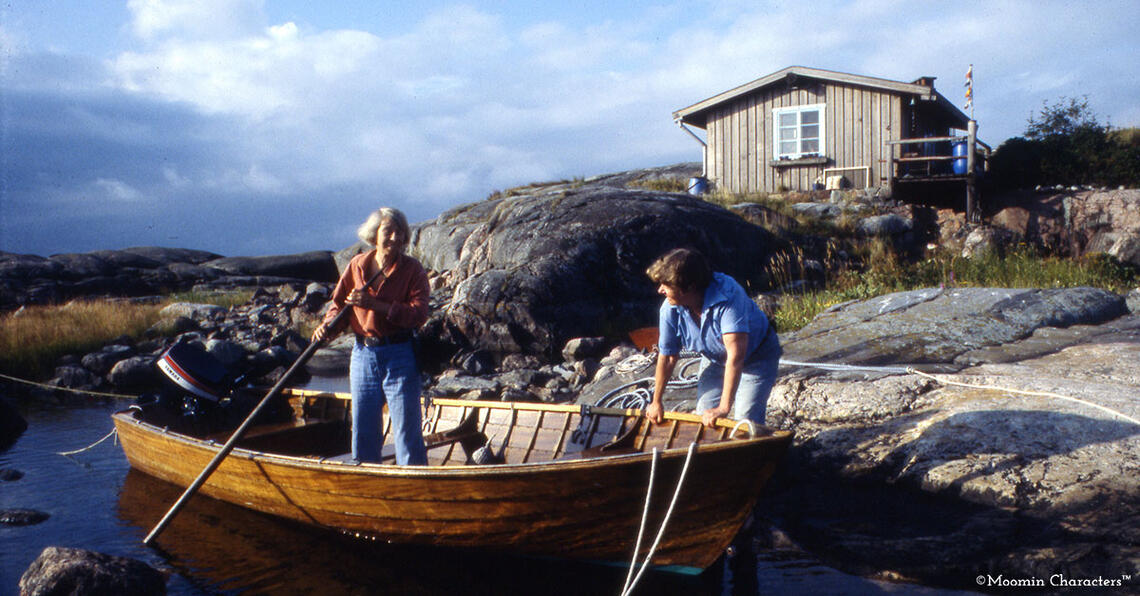
Tove Jansson and Tuulikki Pietilä at Klovharu
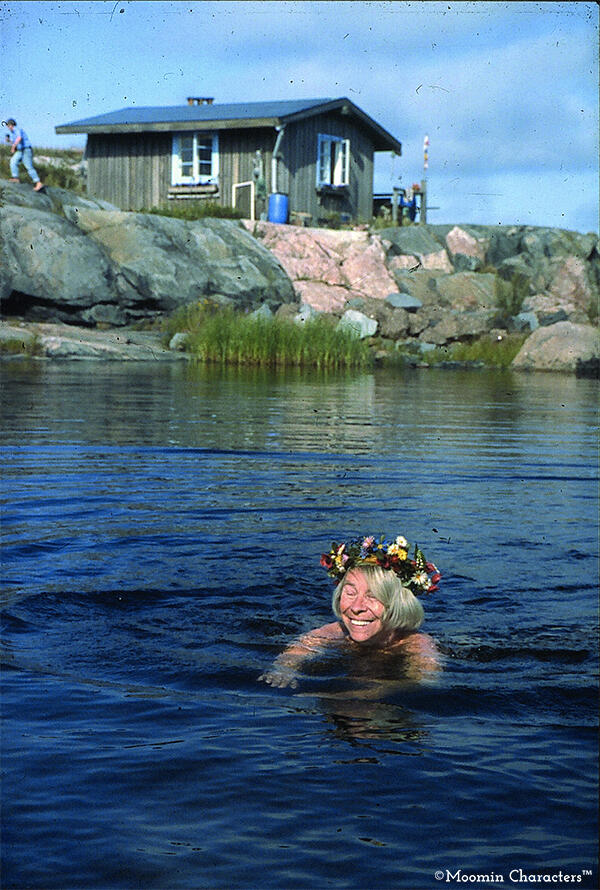
Tove Jansson swimming in Klovharu

Get the complete Moomin Comic Strip from D & Q!
Barnes & Noble – Moomin Deluxe: Volume One
Barnes & Noble – Moomin Deluxe: Volume Two
Amazon – Moomin Deluxe: Volume One
Amazon – Moomin Deluxe: Volume Two
